2026–27 NCAA Transfer Portal Windows & Athlete Guide | ScoutSync
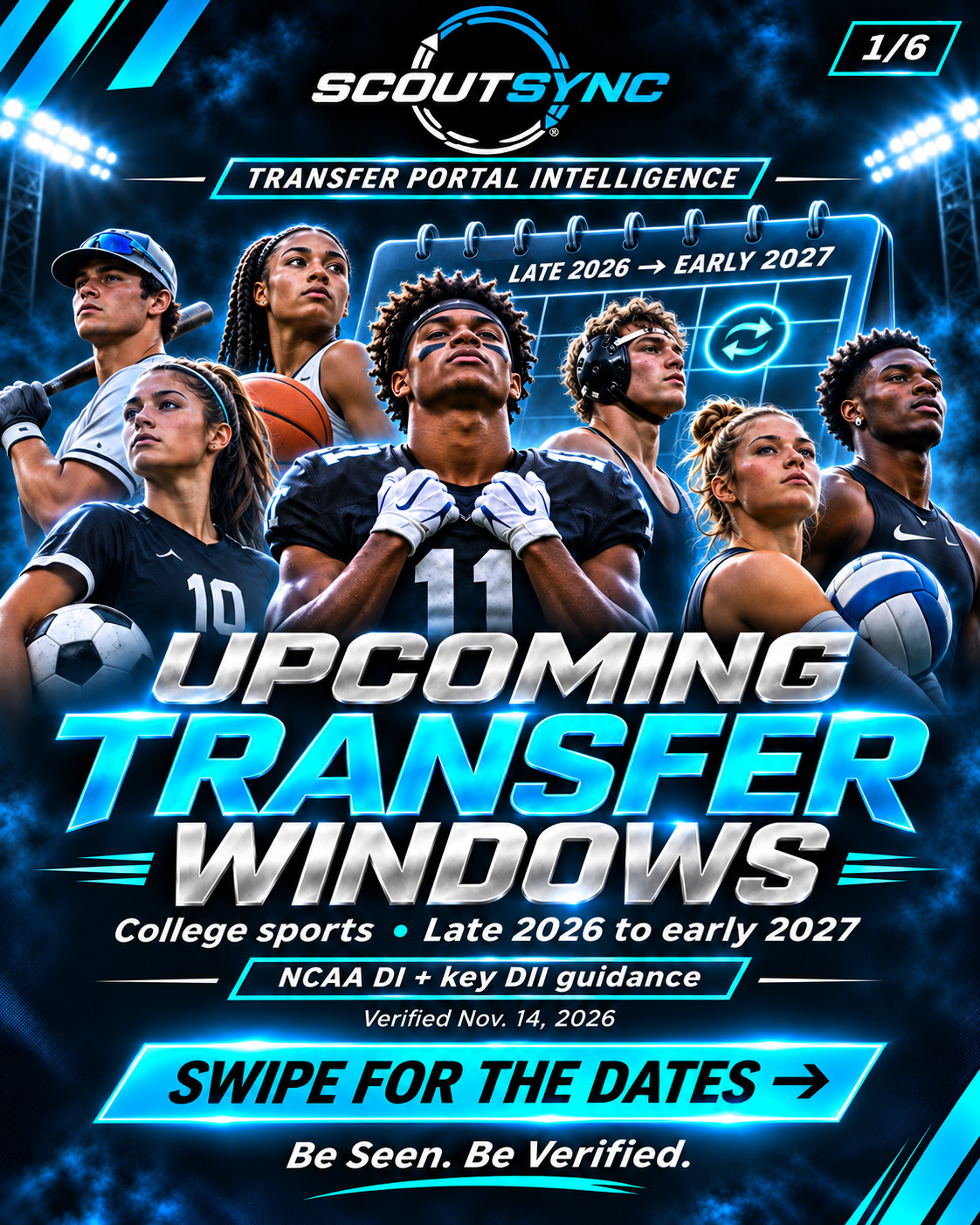
2026–27 College Transfer Portal Windows: What Athletes Need to Know Before They Open
For college athletes considering a transfer, knowing when the transfer portal opens is important.
Knowing what to do before it opens may be even more important.
Transfer rules continue to evolve, and the process is not the same across every sport or college level. NCAA Division I uses sport-specific notification-of-transfer windows. Division II, Division III, NAIA and NJCAA each have different rules and procedures that athletes need to understand before making a move.
As of November 14, 2026, several major NCAA Division I transfer windows are approaching.
Upcoming NCAA Division I Transfer Windows
The NCAA’s current 2026–27 Notification of Transfer Windows calendar lists the following upcoming dates:
Triathlon
November 3 – December 2, 2026
Cross Country / Track & Field
November 23 – December 7, 2026
Men’s Soccer
November 23 – December 22, 2026
Women’s Soccer
November 23 – December 22, 2026
Field Hockey
November 24 – December 23, 2026
Men’s Water Polo
November 30 – December 29, 2026
Fall Window for All Spring Sports
December 1 – December 15, 2026
Women’s Volleyball
December 6, 2026 – January 4, 2027
Football — FBS and FCS
January 4 – January 13, 2027
The NCAA recently shortened the standard football notification window to a 10-day period beginning on the first business day after January 1.
There are additional windows later in 2027 for basketball, baseball, softball, tennis, lacrosse, golf, ice hockey, wrestling and other sports. Women’s flag football is currently listed by the NCAA as to be determined pending the championship selection date.
What Does a Transfer Window Actually Mean?
A common mistake is treating the transfer window like a deadline to select a new school.
That is not what it is.
For NCAA Division I athletes, the transfer window generally controls when an athlete may initiate the notification-of-transfer process. The athlete notifies their current institution, completes the required process and is entered into the NCAA Transfer Portal. Once properly entered, other institutions may be able to communicate with the athlete according to applicable rules.
Admissions deadlines, academic eligibility, scholarship decisions, roster availability and enrollment timelines are separate issues.
That is why athletes should not wait until the first day of the window to begin thinking about their next move.
What Should an Athlete Do Before the Window Opens?
If transferring is even a possibility, preparation should begin before the athlete enters the portal.
1. Update Your Film
Make sure coaches can quickly see recent, relevant film.
A coach evaluating a transfer often needs to make decisions quickly. Film scattered across old links, social media accounts or different platforms creates unnecessary friction.
2. Verify Your Athlete Information
Review:
Height and weight
Position
Current statistics
Measurables
Combine or testing results
Awards and achievements
Playing history
Contact information
The easier you are to evaluate, the easier it is for a coach to determine whether there may be a fit.
3. Understand Your Academic Situation
Transferring is not only an athletic decision.
Course credits, degree progress, eligibility requirements, admissions standards and graduation timelines can all affect whether a move makes sense.
The NCAA specifically advises athletes to understand the transfer and eligibility requirements for their division and to work with institutional compliance offices when evaluating their situation.
4. Identify What You Are Actually Looking For
Do not enter the portal simply because you are frustrated.
Ask:
What level fits me?
What role am I looking for?
What academic programs matter?
How important is playing time?
What geographic areas am I open to?
What type of coaching environment helps me develop?
What does my remaining eligibility look like?
A transfer should have a reason and a strategy behind it.
5. Build an Organized Athlete Profile
Your film, stats, measurables, academic information, athletic history and contact information should be easy to share.
ScoutSync allows athletes to build a digital athlete profile that can continue growing with them across sports, teams, seasons and levels.
Instead of rebuilding your information every time an opportunity appears, your athlete record can continue developing with your journey.
NCAA Division II Athletes Need to Know the Difference
Division II currently operates differently from Division I.
For sports other than football, a Division II athlete may initiate the notification-of-transfer process at any time. There is not currently a national sport-by-sport transfer-window system comparable to Division I.
Football is the exception.
Division II adopted legislation requiring football athletes to follow the applicable Division I rules for initiating notification of transfer.
Because Division I has since moved football to the 10-day period beginning the first business day after January 1, athletes and programs should confirm the applicable 2027 timing directly with their compliance office.
What About NCAA Division III?
Division III does not currently use the same sport-specific national windows as Division I.
Beginning with legislation effective August 1, 2026, Division III athletes may use a notification-of-transfer process, and the division continues to maintain its self-release mechanism for certain Division III-to-Division III conversations.
That means a Division III athlete should not simply look at a Division I portal graphic and assume those dates apply.
Your transfer pathway matters.
NAIA Transfers Work Differently Too
NAIA athletics does not use the NCAA Division I sport-by-sport portal-window model.
NAIA transfer rules instead focus heavily on communication and notification between institutions.
For an athlete currently attending an NAIA institution, the current school must generally be notified when the athlete is communicating with another NAIA institution. NAIA guidance explains that the notification must occur within the applicable 10-day process.
There is another important development for athletes using social media and recruiting platforms:
A public announcement by an NAIA athlete stating that they intend to transfer may be treated as the athlete’s first contact under NAIA rules.
That is one more reason athletes should understand the rules before publicly posting transfer announcements.
NJCAA and Junior College Athletes
Junior college athletes also need to understand that their pathway is different.
NJCAA compliance materials center on eligibility, Letters of Intent, releases and transfer requirements rather than a Division I-style national calendar of sport-specific portal windows.
An NJCAA athlete transferring to an NCAA or NAIA institution must also understand the rules of the level they are transferring into, not just the rules of the school they are leaving.
The Transfer Portal Is a Tool — Not a Transfer Plan
Entering the portal does not guarantee:
A scholarship
A roster spot
Coach interest
Playing time
NIL opportunities
Admission to another institution
A better athletic situation
The portal creates the ability to explore another opportunity.
What happens next depends heavily on preparation, fit, academics, roster needs, performance and communication.
That is where athletes need a plan.
How ScoutSync Can Help Athletes Prepare
ScoutSync is building tools and resources designed to help athletes organize the information surrounding their athletic journey.
Athletes can use ScoutSync to:
Build and maintain a complete athlete profile
Organize film, statistics and performance information
Track measurables and combine results
Manage goals and next steps
Research and organize recruiting targets
Use Coach Leo for transfer education, preparation and planning
Access support from experienced coaches, former professional athletes, scouts and specialists through the ScoutSync Legends Network
The objective is not to promise an athlete a new school.
It is to help athletes become more informed, more organized and easier to evaluate when opportunities arise.
Be Ready Before Your Window Opens
The athletes who wait until the first day of the transfer window to organize everything are already creating unnecessary pressure for themselves.
Know your dates.
Understand your eligibility.
Update your information.
Build your target list.
Talk with your compliance office.
Prepare your athlete profile.
And understand exactly why you are considering your next move.
Your next opportunity may move quickly. Your preparation should start before it arrives.
Create or update your ScoutSync athlete profile:
Learn more about ScoutSync:
Be Seen. Be Verified.
Transfer and eligibility rules can vary based on division, sport, academic status, transfer pathway, institutional circumstances and applicable exceptions. Athletes should confirm their individual situation with their current institution’s compliance office and the institution they are considering.