Africa on the Fast Track: The NFL IPP Class of 2026 and the Dreams Headed for Indianapolis
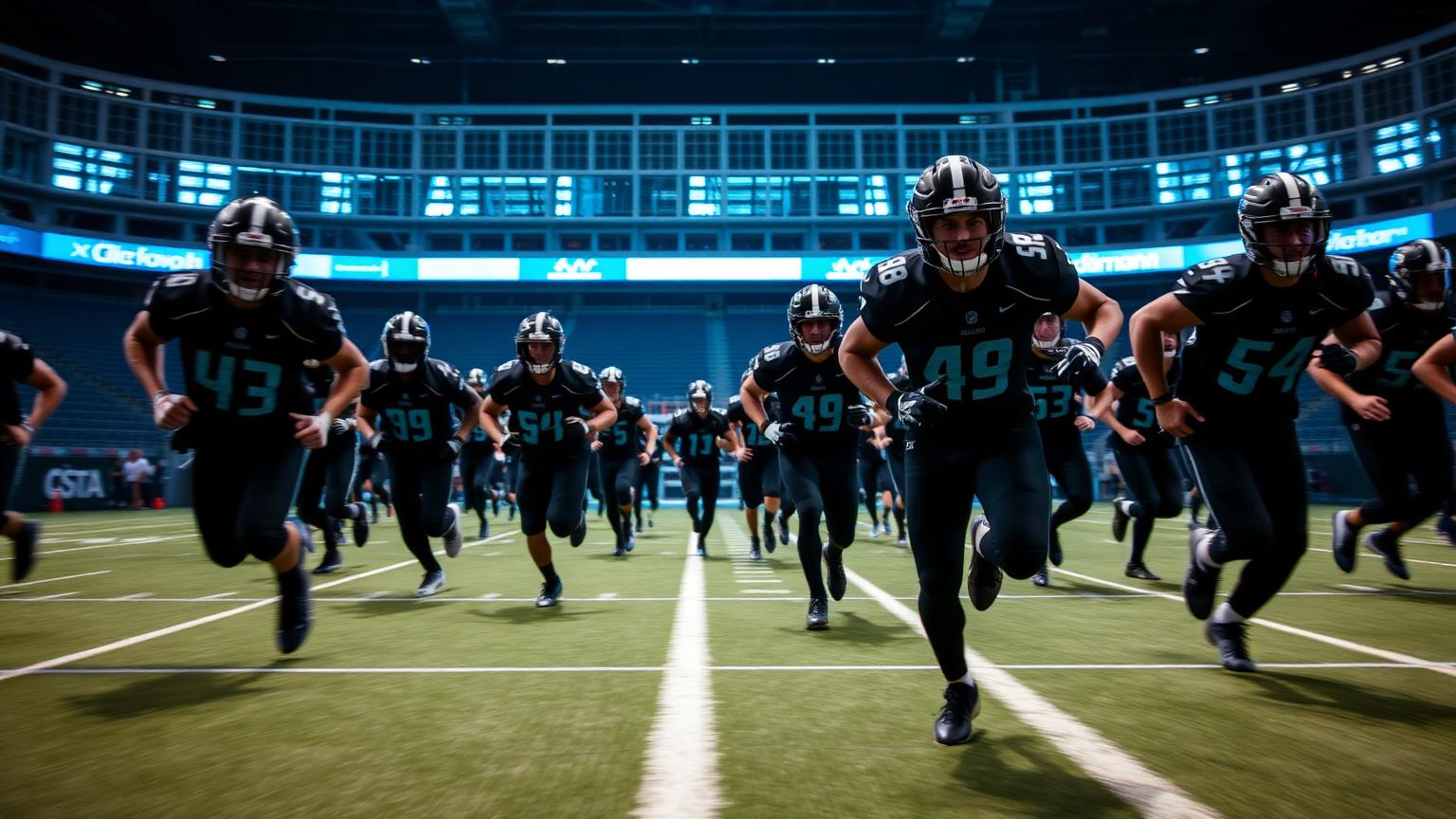
Africa on the Fast Track: The NFL IPP Class of 2026 and the Dreams Headed for Indianapolis
There's a moment every year when the football world funnels into one place, one rhythm, one obsession: measurables, movement skills, upside.
This year, that place is Indianapolis again — the 2026 NFL Scouting Combine runs Feb. 23 to March 2.
But while the spotlight will be blinding inside Lucas Oil Stadium, a different story is building just off the main stage — a story the global game has been waiting to tell:
Africa is arriving, not as a novelty, but as a pipeline.
The program built for the world
The NFL's International Player Pathway (IPP) exists for one reason: to turn elite international athletes into legitimate NFL prospects by teaching them the game the right way — on the field and in the classroom — and then putting them in front of decision-makers.
Starting in January 2026, the IPP Class of 2026 enters a 10-week training program at X3 Performance and Physical Therapy in Fort Myers, Florida, culminating in a showcase for NFL club scouts.
If the Combine is the league's annual audition for the known, the IPP is the league's bet on the unknown — the belief that greatness doesn't need to be born within traditional borders to be real.
The African athletes of the IPP Class of 2026
The NFL's official announcement of the IPP Class of 2026 includes 13 athletes representing 10 nations — and this year, Africa is unmistakably present.
Nigeria leads the charge (5 athletes)
Nigeria is one of the most represented nations in the entire class, with five athletes selected:
- Collins Arogunjo (Nigeria)
- Uar Bernard (Nigeria)
- Michael Daramola (Nigeria)
- Chibuike Madu (Nigeria)
- Anjola Oketola (Nigeria)
Five names. One message: Nigeria is producing athletes the NFL can't ignore.
Kenya steps onto the runway (1 athlete)
- Joshua Weru (Kenya)
The diaspora thread (1 athlete)
- Seydou Traore (Algeria / Ivory Coast / United Kingdom)
Together, that's seven African-connected athletes entering the NFL's most direct global pathway — not as a headline for one day, but as a signal for what's next.
Their "player metrics" right now — and why that's the point
Here's the honest truth that makes this story even more compelling:
For many IPP athletes — especially those coming from non-traditional football backgrounds — the world doesn't have a neat stat page yet. That's not a weakness. That's the entire mission.
The program is built to convert raw athletic gifts into football-ready skill, and to document them in the language every scout speaks: position fit, movement traits, teachability, and repeatable performance.
What we can say with certainty is this:
- Their official measurements and testing profiles will sharpen during the 10-week training block and the subsequent scout showcase.
- The NFL is placing these athletes inside a structured development lane, during the exact window when personnel departments are locked in on evaluation season.
That timing matters.
Why the Combine makes this bigger
The Combine is football's annual conversion moment — where potential becomes a number, a grade, a board slot.
And in 2026, the Combine's dates (Feb. 23–Mar. 2) sit in the same ecosystem of scouting urgency that the IPP program feeds into.
So while the world debates 40 times and wingspans in Indianapolis, the IPP class is learning how to:
- translate athletic traits into football movement patterns,
- build pro habits in a pro environment,
- and prepare for the moment scouts have to ask:
"Can he play on Sundays — and can he learn fast enough to matter?"
That question is universal. It doesn't care where you're from. It only cares whether you can survive the standard.
The bigger takeaway: talent was never local
This is why we're spotlighting these athletes for our African Talent. Global Stage. series.
Because every time the NFL expands a pathway like this, it's really saying something much deeper:
- There are athletes in Lagos, Abuja, Nairobi, and beyond who were never "missing."
- They were simply not being measured, coached, and showcased inside the same system.
Now the system is widening.
Nigeria's five selections are not just five opportunities — they're five proof points for the next wave of kids watching from home.
Kenya's selection is not just a name on a list — it's a message that new countries can enter the conversation.
And the diaspora representation reminds the world that identity isn't always one flag — sometimes it's a journey.
Closing: the moment before the moment
Indianapolis will always be the headline.
But don't miss what's happening in the margins — because that's where the future usually starts.
Seven African-connected athletes are walking into the NFL's most intentional development pipeline.
And whether they make rosters this year or next, the result is already real:
A kid in Africa can look at the NFL now and see a door that didn't exist before.
That's how pipelines begin.