The Global Pipeline Is Changing: Why International Athletes Need a Plan Before the Opportunity Comes
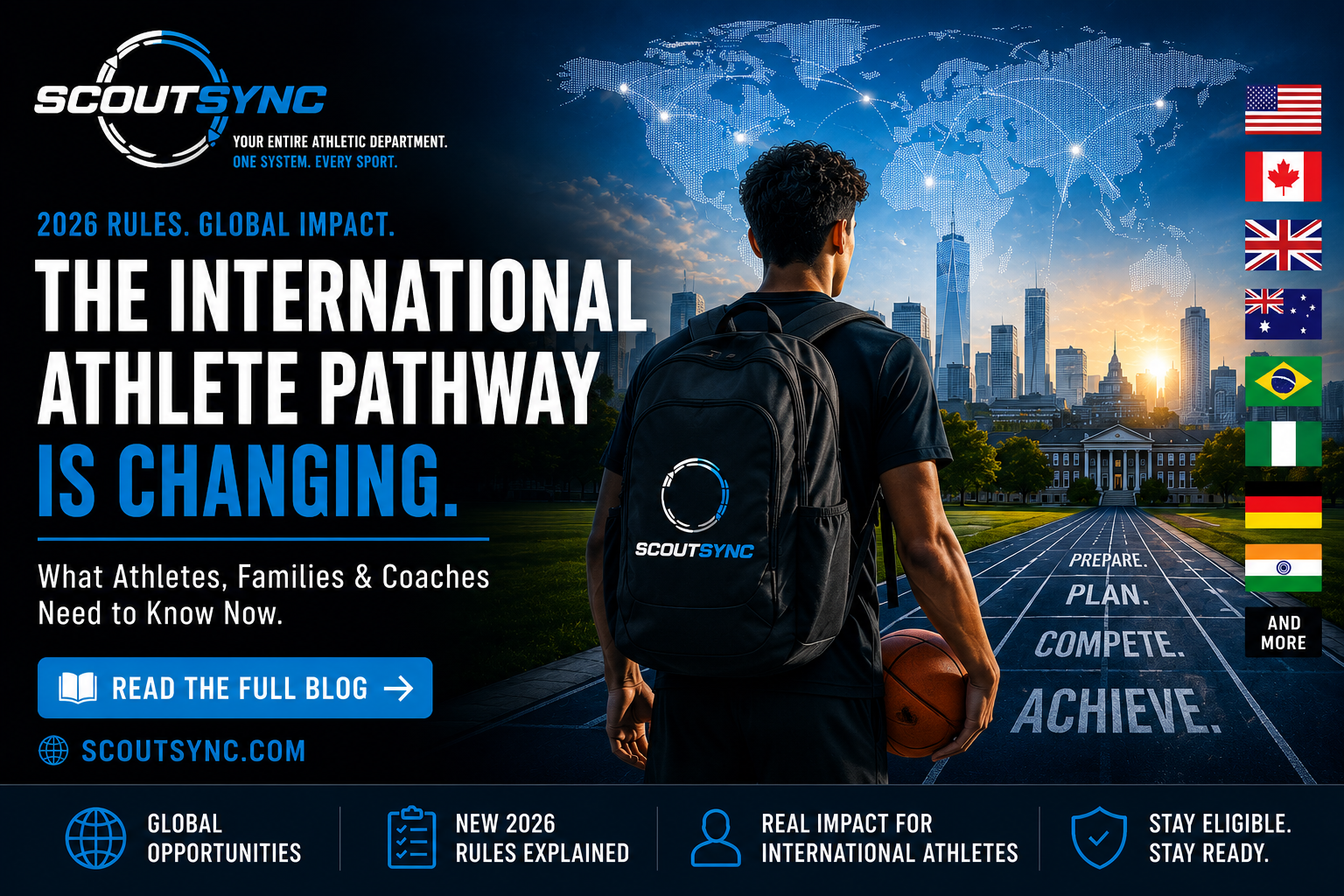
The Global Pipeline Is Changing: Why International Athletes Need a Plan Before the Opportunity Comes
College sports are no longer just an American recruiting system.
They are global.
Every year, thousands of international student-athletes leave home to chase education, competition, exposure, and a new future through U.S. college athletics. The NCAA says nearly 25,000 international student-athletes compete across NCAA sports, and that number represents more than just participation. It represents families making sacrifices, athletes betting on themselves, coaches searching beyond traditional borders, and schools trying to find talent in a rapidly changing world.
But here is the part too many athletes, parents, academies, clubs, and coaches are not talking about enough:
The global pathway is getting more powerful, but it is also getting more complicated.
In the past, many international athletes could develop overseas, play at a high level, take time after secondary school, and still find a pathway into U.S. college athletics. That model is now under serious pressure.
The 2026 recruiting landscape is forcing international athletes to think earlier, organize better, and understand the rules before the opportunity comes.
The international pathway is no longer simple
For years, international prospects were often evaluated differently than traditional U.S. high school recruits.
Some came from academies.
Some came from club systems.
Some played for national teams.
Some competed in professional environments overseas before considering the NCAA.
That created a gray area.
A player could be young, talented, and technically still eligible. Another player could be older, physically mature, and have years of experience against professional competition. For U.S. colleges, that became attractive. Why take a younger, unproven recruit when an older international player already had professional-level training, physical readiness, and game experience?
That is where the tension begins.
The NCAA is trying to protect college athletics from becoming a fallback option for professional athletes while still preserving opportunities for real student-athletes. That balance is difficult, especially in countries where youth development is tied directly to professional clubs.
In many parts of Europe, Africa, Australia, South America, and Asia, a talented athlete may enter a club academy early, train in a professional environment, receive benefits, travel with senior teams, or sign agreements before fully understanding how those decisions could affect future NCAA eligibility.
That is why the margin for error is shrinking.
The 2026 warning: professional experience now carries more risk
Recent NCAA guidance has put new attention on international athletes who have signed agreements with, competed for, or received compensation from teams in leagues where pay exceeds “actual and necessary expenses.”
That may sound technical, but the impact is real.
For athletes connected to major professional leagues, especially in basketball, the path to college could become much harder. Sports Illustrated reported that the NCAA’s updated guidance could affect international prospects connected to leagues such as EuroLeague, where minimum compensation can exceed the NCAA’s amateurism threshold.
That does not mean every international athlete is blocked.
It does mean every international athlete needs to know exactly what they signed, where they competed, what compensation they received, and whether their club or league structure creates eligibility risk.
For families and academies, this is the lesson:
A contract signed too early can close doors later.
A small payment that seems harmless can create eligibility questions.
A professional appearance can change how the athlete is reviewed.
A delay after graduation can cost valuable time.
The world is full of talented athletes who lose options not because they were not good enough, but because nobody helped them understand the process early enough.
The age-based model could change the timing conversation
The NCAA is also moving toward a possible age-based eligibility model.
Under the concept currently being discussed, Division I athletes would receive up to five years of competition within a five-year window that starts the academic year after high school graduation or after the athlete turns 19, whichever comes first.
If adopted, this would create a major shift for international athletes.
Why?
Because many international athletes do not follow the U.S. recruiting timeline. Some graduate from secondary school and spend one, two, or three years developing with a club, national team, academy, or semi-professional program before trying to enter college.
That delay may no longer be harmless.
For an athlete who graduates at 18 and waits until 21 to pursue college sports, the eligibility clock may already be moving. For an athlete who turns 19 before making a college plan, the clock may start before they realize it.
This could affect basketball players, soccer players, swimmers, tennis players, track athletes, rugby players, volleyball players, and many others.
The message is clear:
International athletes cannot wait until the last minute to get organized.
The pathway has to start earlier.
The good news: some rules are becoming more athlete-friendly
Not every change is restrictive.
One major positive development is around pre-enrollment prize money.
The NCAA has moved to allow prospects to accept prize money in their sport before enrolling without impacting eligibility. This is especially important for athletes in individual sports like tennis, swimming, golf, track and field, and combat sports, where prize money may be part of the competitive structure before college.
That is a meaningful shift.
It recognizes that international sport systems do not always operate like U.S. high school sports. Athletes may compete in events that award prize money long before they understand the NCAA pathway.
But even here, athletes still need to be careful.
Pre-enrollment prize money may be more flexible, but post-enrollment payments, NIL activity, immigration rules, tax issues, and school-specific compliance still require serious attention.
The rule may open a door, but it does not remove the need for guidance.
NIL and visas remain one of the biggest issues
One of the biggest misunderstandings in college sports right now involves international student-athletes and NIL.
The NCAA may allow certain NIL and revenue-sharing opportunities, but immigration law is a different system.
Many international student-athletes are in the United States on F-1 student visas. That visa status can create major restrictions around off-campus work, active NIL activity, promotional appearances, paid content, endorsements, and other compensation.
This is where athletes can get trapped.
A deal may be allowed under NCAA rules but still create immigration risk.
A school may discuss revenue sharing, but the athlete’s visa status may complicate how money can be received.
A brand may want to sign an international athlete, but the activity required could be considered work.
This is not something families should guess on.
International athletes need to ask better questions before signing anything:
Can I accept this payment under my visa status?
Where is the activity taking place?
Is this active work or passive income?
Does my school compliance office understand my immigration status?
Have I spoken with an immigration professional who understands student-athlete compensation?
What happens if the payment is approved by the NCAA but creates visa problems?
This is not fear. This is preparation.
What this means for international athletes right now
The international pathway is still real.
The opportunity is still there.
But the old approach of waiting for a coach, agent, academy, or random connection to figure everything out is too risky.
Athletes need a complete profile.
Families need organized documents.
Clubs and academies need to understand the rules before they push athletes into contracts or competitions that could affect eligibility.
Coaches need better visibility into academic readiness, athletic history, age, graduation timelines, film, club background, and amateurism risk.
The athletes who move faster will not always be the most talented.
They will be the most prepared.
What every international athlete should organize now
If you are an international athlete who wants to study and compete in the United States, start building your file early.
At minimum, you should organize:
Academic transcripts
Graduation timeline
Passport information
Parent or guardian contact
Sport, position, measurements, and statistics
Highlight film and full game film where possible
Club, academy, or national team history
Any contracts or agreements signed
Any compensation, prize money, stipends, housing, travel, or benefits received
Visa history
Coach references
Medical and eligibility documents
A clear statement of your academic and athletic goals
This information matters because it helps schools, coaches, compliance teams, and evaluators understand the full picture.
Talent gets attention.
Organization moves the process.
Where ScoutSync fits in
At ScoutSync, we believe talent should not be limited by geography, scattered information, or lack of access.
But we also believe athletes need more than exposure.
They need structure.
They need a complete profile.
They need to understand what schools, coaches, scouts, and programs need to review.
They need to know that an opportunity is not just about being seen. It is about being ready when the right people are looking.
ScoutSync Online helps athletes organize their athletic profile, sport information, video, measurements, school background, and development journey in one place. For international athletes, that structure matters even more because the process often involves more steps, more documents, more risk, and more people making decisions.
If you are an international student-athlete serious about the U.S. pathway, start now.
Create your profile on scoutsynconline.com.
Then email contact@scoutsync.com with your interest.
Subject line: USA High School Sports Interest or USA College Sports Interest
Questions for our readers
This conversation is bigger than one rule change.
It affects athletes, families, coaches, academies, clubs, agents, schools, federations, and entire countries trying to create better pathways.
So we want to hear from you:
Have you seen an international athlete lose an opportunity because the process started too late?
Are clubs and academies doing enough to educate families before athletes sign agreements?
Should the NCAA create clearer rules for international athletes coming from professional-style development systems?
How should schools protect international athletes from NIL and visa mistakes?
What stories have you heard from athletes trying to move from overseas sport systems into U.S. college athletics?
Drop your thoughts, stories, or questions in the comments.
The global pipeline is not slowing down.
But the athletes who win the next era will be the ones who understand that preparation starts before the offer, before the contract, before the visa, and before the opportunity.
All Sports. One Family.